
Moving Forward while Reading Backwards
A Lenten Gift for the Journey

This is my second post in my Lent series. I started on Ash Wednesday with Blessing the Dust.
I’ll never forget how the movie Inception opened. It started at the end. The main character was lying on the beach, and then the story slowly wove backwards and forwards through its different dreamy layers, keeping me glued to every scene, every small detail that only made sense once I knew where the whole thing was going. That film sent me back to Christopher Nolan’s earlier work, particularly Memento, and together they challenged the way I think about stories: both in the telling and in the receiving of multilayered and complex narratives. Sometimes we are invited to start with the end and work back to the beginning, and with the skillful guidance of the movie director (very much behind the scenes), we pass through everything in the middle so the message of the movie becomes clearer or, in most cases, makes us think more deeply even with unanswered questions.
My artistic fascination with movies like this eventually became a theological and philosophical one too. Life is an integrated whole rather than separate departments, and one field flows into another. This is what happened to me, from movies to theological framing and later into how I read the Bible.
Since coming to Geneva, especially after we battled cancer as a family and lived through COVID-19 and all of us are still navigating the chaos of our current moment, Christian hope and eschatology have occupied my thinking deeply. First, and unforgettably, through Vitor Westhelle’s book Eschatology and Space, which left a lasting impression. Then through preparing for the Lutheran World Federation Assembly with its theme, One Body, One Spirit, One Hope, and later through crafting the LWF strategy we called Sharing Hope. What began professionally became deeply personal. What if knowing the ending changes how we read everything before it? And more than that: what if being immersed in the final eschatological hope shapes the way we work to change everything that is wrong today?
That question led me back to the Book of Revelation with fresh eyes.
It was the last two chapters that first caught my attention: the vision of God wiping away every tear and then the picture of the healing leaves for the nations. Those images moved me in a way that felt larger than I expected. And then reading back to the opening three chapters, seeing Revelation as a letter written to seven churches, each with their strengths and weaknesses, living under empire, I found it strangely and powerfully relevant for the church today, for the world I work in, and for my own life.
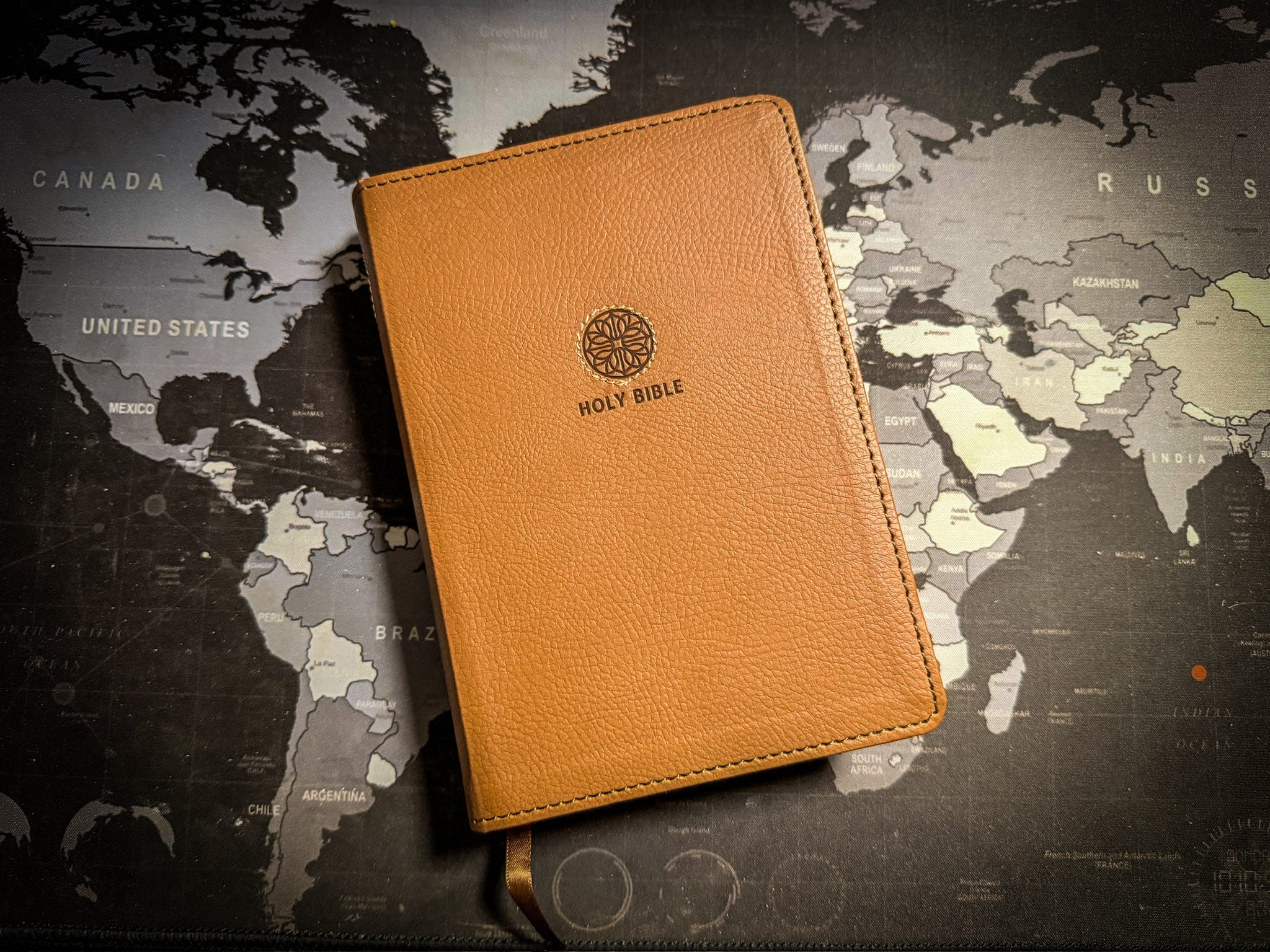
So I decided to try reading the whole Bible this way. Book by book, canonically backwards. I don’t read it chapter by chapter or verse by verse backwards, which would be disorienting, but whole books in reverse canonical order. Revelation first, then Jude, the Johannine letters, and now I’m already into 1 and 2 Peter. Working with AIRA, my AI research assistant, I developed this into a three-year reading plan. After a few iterations, I landed with 156 weeks, roughly eight chapters per week; at least to me it would be sustainable and unhurried rather than a one-year crash course (that might be overambitious). When I mentioned the idea to a bishop during my recent trip to the USA, his eyes lit up, and he was genuinely encouraging. When I brought it up with a former Brazilian church leader and New Testament scholar who is writing a Bible study on Revelation, he found it equally intriguing. I have a feeling this will turn out to be relevant not only for academics or clergy but for anyone willing to look at an ancient text with fresh eyes.
I started more intentionally at the beginning of Epiphany 2026 and have already reached 1 Peter. Reading about what living hope meant for a church facing tremendous challenges back then feels right for entering Lent. But if you’re only hearing about this now, don’t worry. You can still start from Revelation and catch up easily.
It’s not a perfect reading plan. It’s unfinished and very much experimental, with reflection prompts to invite further thought. Currently, I read it contemplatively, letting certain words and phrases shimmer rather than rushing to grasp everything. But one doesn’t need to be afraid to give this a try.
Below is the first year of the reading plan, freely offered. It is a small beginning, enough to see if this way of reading resonates with you. If you’d like to continue into years two and three and travel the full journey together, subscribe to this Substack and I’ll send you the complete three-year plan. For those already subscribed, send me a direct message or email me for it.
The ending has already been announced. We’re just reading our way back to understand how we got here.
[Download link — Year One PDF]